
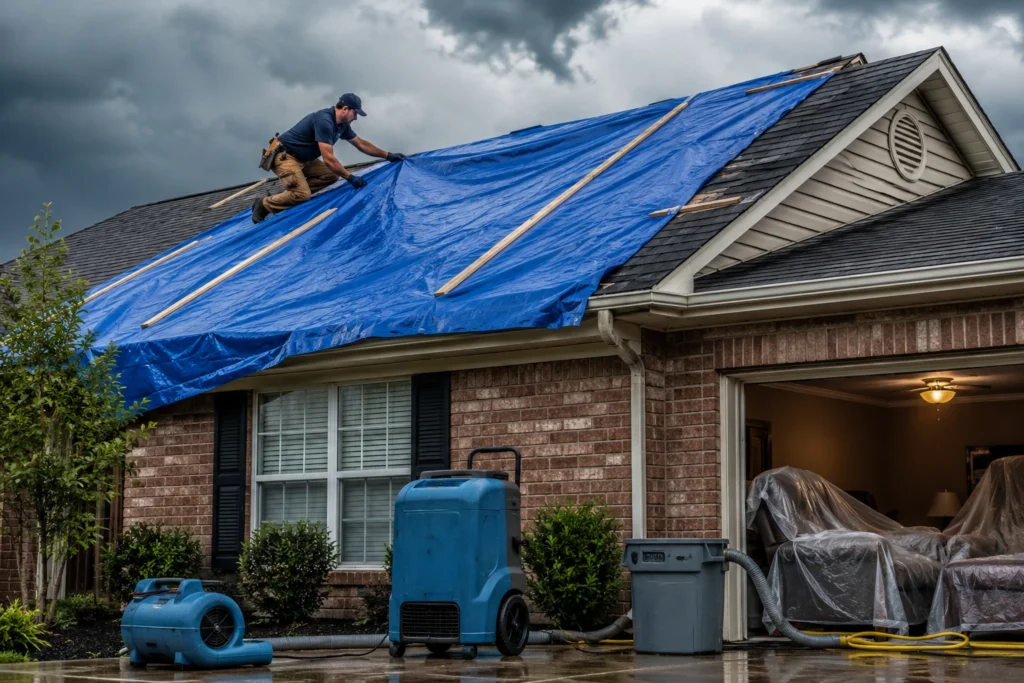
Texas homeowners know storms are part of life. One week brings sunshine. The next brings hailstones large enough to crack windows, dent vehicles, and damage roofing systems across entire neighborhoods. When a severe storm strikes, many property owners immediately focus on visible damage. They inspect the yard, check their vehicles, and look for obvious roof problems. Unfortunately, hail damage is often far more extensive than it appears.
That’s why understanding a roof hail damage insurance claim Texas process is so important. The difference between a properly documented claim and an incomplete one can mean thousands or even tens of thousands of dollars in settlement value. In communities such as Friendswood, hail events frequently trigger insurance claims that involve roofing systems, gutters, siding, windows, HVAC equipment, and interior water damage. Yet many homeowners unknowingly leave money on the table because damage is overlooked during inspections or omitted from repair estimates. This guide walks through everything homeowners need to know about identifying hail damage, protecting their property, documenting losses, navigating supplements, and understanding why professional representation can dramatically affect outcomes.
Understanding How Hail Damages Different Roofing Systems
Not all hail damage looks alike. The same storm can produce completely different results depending on the roofing material, age of the roof, installation quality, and hail characteristics. A golf-ball-sized hailstone striking a metal roof creates different evidence than the same impact hitting an asphalt shingle roof or a clay tile system. Recognizing those differences is critical when pursuing a hail damage on roof insurance claim.
Asphalt Shingle Roof Hail Damage
Asphalt shingles remain the most common residential roofing material in Texas. They also happen to be one of the most misunderstood during hail inspections. Many homeowners expect to see missing shingles after a storm. In reality, hail damage frequently appears much more subtle.
Common Signs of Asphalt Shingle Hail Damage
- Granule loss
- Circular impact marks
- Soft bruising
- Fractured asphalt mat
- Exposed fiberglass reinforcement
- Broken shingle corners
Granules serve as the protective layer shielding shingles from ultraviolet exposure. When hail knocks those granules loose, deterioration accelerates. A roof may appear fine from the street while sustaining substantial functional damage.
Damage Homeowners May Notice
You don’t necessarily need to climb onto the roof to identify warning signs.
Watch for:
- Excessive granules in downspouts
- Granule accumulation in gutters
- Dark spots on roofing surfaces
- Water stains inside the home
- Pieces of shingles on the ground
These indicators often justify a professional inspection.
Metal Roof Hail Damage
Metal roofing systems have become increasingly popular throughout Texas. They offer durability, longevity, and strong wind resistance. However, they are not immune to hail.
Typical Metal Roof Damage
Metal roofs commonly develop:
- Dents
- Surface deformation
- Protective coating damage
- Scratches
- Fastener damage
- Seam separation
One of the most contentious issues in hail roof damage insurance claims involves distinguishing cosmetic damage from functional damage. Insurance carriers frequently classify dents as cosmetic.
Yet that assessment is not always accurate. A dent that compromises coatings can expose metal to oxidation and corrosion. Damaged seams may eventually allow moisture intrusion. In some cases, denting can affect structural integrity. The distinction matters because functional damage often supports replacement or more extensive repairs.
Tile Roof Hail Damage
Tile roofs are beautiful. They’re also expensive. Whether made of concrete or clay, tile systems present unique challenges during insurance claims.
Common Tile Roof Damage
Inspectors often look for:
- Cracked tiles
- Fractured corners
- Impact fractures
- Broken ridge caps
- Underlayment exposure
Unlike asphalt shingles, tile damage can be highly localized. One impact may break a single tile while leaving surrounding areas untouched.
Hidden Damage Concerns
Tile roofing claims become especially complicated because surface damage isn’t always the full story. When hail breaks tiles, underlying waterproofing systems may also suffer damage.
Additionally, matching replacement tiles can become a major issue. Manufacturers discontinue products regularly. Color fading over time further complicates repairs. These matching concerns often increase claim values significantly.
Roofing Components Commonly Damaged by Hail
Homeowners frequently focus solely on shingles or tiles. That’s a mistake. Many claims become underpaid because critical supporting components are overlooked.
Frequently Damaged Roofing Components
| Component | Why It Matters |
| Ridge Caps | Protect roof peaks |
| Flashing | Prevents water intrusion |
| Pipe Boots | Seal plumbing penetrations |
| Valley Metal | Handles concentrated runoff |
| Roof Vents | Critical ventilation |
| Drip Edge | Directs water properly |
| Skylights | Vulnerable impact surfaces |
| Gutters | Common hail targets |
A complete roof hail damage insurance claim Texas evaluation should include every one of these components.
Immediate Steps to Take After a Hailstorm
What happens during the first 24 to 72 hours matters. A lot. The actions you take immediately after a storm can strengthen or weaken your insurance claim.
Prioritize Safety
Never climb onto a roof immediately after a hailstorm. Wet surfaces create serious fall hazards.
Instead:
- Stay off the roof
- Inspect from ground level
- Look for visible damage
- Watch for electrical hazards
- Monitor for active leaks
Safety always comes first.
Conduct a Property Walkaround
Perform a thorough exterior inspection.
Look for damage to:
- Gutters
- Downspouts
- Mailboxes
- Fencing
- Air conditioning units
- Window screens
- Garage doors
- Outdoor furniture
These collateral indicators often help confirm hail size and storm severity.
Check the Interior
Some damage doesn’t reveal itself outside.
Inspect:
- Ceilings
- Attics
- Walls
- Closets
- Around skylights
Even small water stains deserve attention.
Protect the Property From Further Damage
Insurance policies generally require homeowners to take reasonable steps to prevent additional damage. That doesn’t mean permanent repairs. It means mitigation.
Examples include:
- Emergency tarping
- Water extraction
- Temporary leak containment
- Protecting personal property
Keep every receipt. These costs may be reimbursable under your policy.
Reporting the Claim
Once damage is identified, notify your carrier promptly.
Provide:
- Date of loss
- Description of storm
- Areas affected
- Contact information
Keep the report factual. Avoid guessing about repair costs or damage severity. Let evidence tell the story.
How to Properly Document Hail Damage
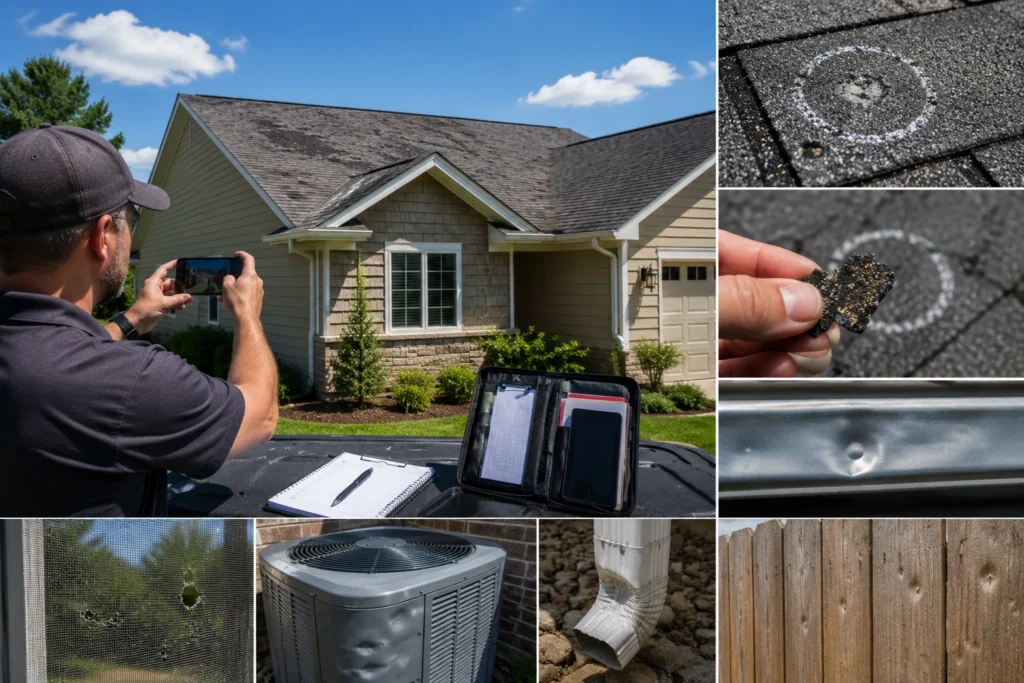
One of the most important topics homeowners research is How to Document Hail Damage for an Insurance Claim. The reason is simple. Documentation wins claims. The stronger your evidence, the stronger your position during negotiations.
Build a Storm Damage File
Create a dedicated folder that contains:
- Claim number
- Weather reports
- Inspection reports
- Contractor estimates
- Photos
- Videos
- Communication logs
Organization pays off later. Especially if disputes arise.
Photograph Everything
Take more photographs than you think you’ll need. Then take more.
Capture:
Wide-Angle Photos
- Entire roof slopes
- Front elevation
- Rear elevation
- Side elevations
Close-Up Photos
- Impact marks
- Broken materials
- Dented metal
- Cracked tiles
- Water stains
Collateral Damage
Don’t forget:
- Gutters
- Screens
- HVAC units
- Downspouts
- Fences
Collateral evidence often strengthens roof damage arguments.
Use Video Documentation
Video provides context that photographs sometimes miss. Walk around the property. Narrate observations. Show overall conditions and specific damages. The goal is creating a visual timeline of the loss.
Maintain a Communication Log
Insurance claims generate paperwork quickly.
Track:
| Information | Example |
| Date | June 5 |
| Contact Person | Adjuster Name |
| Phone Number | Company Contact |
| Discussion Summary | Inspection scheduled |
| Follow-Up Required | Send photos |
Simple records prevent misunderstandings later.
Understanding the Insurance Inspection Process
After claim reporting, the carrier assigns an adjuster. This inspection plays a major role in claim valuation. Many homeowners assume the inspection is exhaustive. Unfortunately, that’s not always the case.
What Adjusters Typically Examine
- Roofing surfaces
- Gutters
- Siding
- Exterior components
- Interior damage
Inspection quality varies considerably. Some inspections are extremely thorough. Others are surprisingly brief.
Why Damage Gets Missed
Several factors contribute:
- Time limitations
- Roof accessibility challenges
- Weather conditions
- Inexperience
- Incomplete documentation
This is one reason claim disputes occur so frequently following major Texas hailstorms.
Engineering Inspections
For larger or contested claims, carriers sometimes hire engineers.
These inspections often focus on:
- Cause of damage
- Extent of damage
- Storm-related impacts
- Pre-existing conditions
Engineering reports can heavily influence claim outcomes. For homeowners interested in the science behind impact forces and material behavior, concepts from the field of Tribology help explain how repeated contact, friction, and surface damage affect building materials over time.
What Insurance Carriers Commonly Miss in Their Scope
This is where many claims begin to unravel. A roof replacement estimate may look complete. But appearances can be deceiving. Experienced claim professionals regularly identify omitted items that materially affect settlement values. Some omissions are accidental. Others stem from limited inspections. Either way, homeowners often pay the difference if missing items aren’t addressed.
Roofing Components Frequently Missing From Insurance Estimates
The biggest misconception in storm claims is that the insurance estimate represents every damaged item. It often doesn’t. Many initial scopes focus on the most obvious damage while overlooking critical roofing components required for a proper restoration.
Flashing
Flashing protects roof penetrations, valleys, walls, chimneys, and transitions. When roofing materials are replaced, flashing frequently requires replacement as well. Yet flashing is commonly omitted from estimates.
Starter Shingles
Starter shingles are not optional accessories. They are an essential part of a properly installed roofing system. When roof replacements occur, starter materials often need replacement to meet manufacturer specifications.
Ridge Caps
Ridge caps receive direct exposure during hailstorms. They also experience substantial wear from wind and temperature changes. Damage to ridge caps frequently accompanies field shingle damage.
Drip Edge
Drip edge protects roof edges from water intrusion. Many older homes require drip edge upgrades to satisfy current building requirements.
Valley Metal
Roof valleys handle enormous volumes of water. Damage in these areas can compromise drainage and increase future leak risks.
Ventilation Components
Proper attic ventilation matters.
A lot.
Roof replacements often involve:
- Ridge vents
- Turtle vents
- Power vents
- Intake systems
Damaged ventilation systems can affect roof performance long after the storm ends.
Building Code Upgrades Often Missing From Claims
One area homeowners rarely consider is code compliance. Insurance carriers may initially scope repairs based on existing conditions. However, reconstruction often must satisfy current building requirements.
Potential code-related items include:
- Drip edge installation
- Ventilation improvements
- Underlayment upgrades
- Flashing requirements
- Fastener specifications
Depending on policy language, these upgrades may be covered. Failing to identify them can significantly reduce settlement amounts.
Interior Damage Is Frequently Overlooked
Roof claims aren’t always just roof claims. A compromised roofing system can lead to interior issues that appear days, weeks, or even months later.
Areas commonly missed include:
- Ceiling staining
- Wet insulation
- Attic damage
- Drywall deterioration
- Paint damage
- Flooring damage
Homeowners should continue monitoring the property after the storm rather than assuming all damage appears immediately.
Understanding the Supplement Process
One of the most important yet misunderstood parts of a storm claim involves supplements. In fact, many homeowners searching online for Hail Damage Claim Supplements: What Carriers Miss in Their Scope are trying to understand why repair costs often exceed initial insurance estimates. The answer is straightforward. Initial inspections rarely capture every damaged component.
What Is a Supplement?
A supplement is a request for additional claim funds based on legitimate damages that were omitted, underestimated, or discovered after the initial inspection. Supplements are not unusual. They’re common. Especially on roof claims.
Why Supplements Occur
Several factors contribute:
Hidden Damage
Some damage remains concealed until tear-off begins.
Examples include:
- Decking damage
- Underlayment damage
- Fastener issues
- Structural concerns
Code Compliance
Current requirements may differ from original construction standards. Additional work may become necessary.
Material Availability
Matching issues frequently arise. Replacement materials may no longer be manufactured.
Scope Omissions
Sometimes components simply were not included during the first inspection.
Common Supplemental Items
| Supplemental Item | Reason Added |
| Additional Shingles | Hidden impact damage |
| Flashing | Required replacement |
| Decking Repairs | Damage discovered during tear-off |
| Ridge Caps | Not included initially |
| Vent Components | Replacement required |
| Underlayment | Damaged beneath roofing |
| Code Upgrades | Required by regulations |
| Interior Repairs | Leak damage discovered later |
These additions can substantially increase claim values.
How the Supplement Process Works
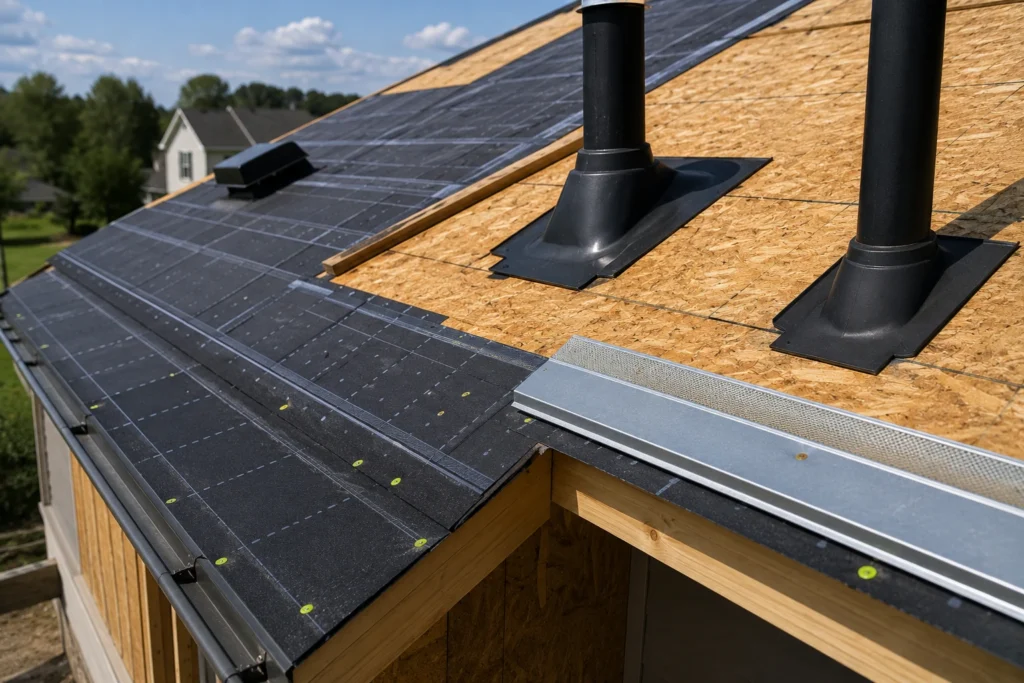
The process typically follows several steps:
Step One: Damage Discovery
Additional damage becomes apparent during construction or detailed review.
Step Two: Documentation
Photographs, measurements, invoices, and supporting evidence are collected.
Step Three: Submission
Supporting documentation is submitted to the insurance carrier.
Step Four: Review
The carrier evaluates supplemental requests.
Step Five: Payment
Approved supplemental items generate additional claim funds. The key is documentation. Without evidence, supplements become difficult to justify.
Common Reasons Hail Claims Become Underpaid
Many homeowners assume insurance companies intentionally underpay claims. The reality is often more complicated. Underpayments can result from several issues.
Incomplete Inspections
Not every roof receives the same level of attention. Time limitations and access issues sometimes affect inspections.
Insufficient Documentation
Poor photographs. Missing records. Lack of contractor support. All can weaken a claim.
Pre-Existing Damage Arguments
Carriers occasionally contend that damage existed before the storm. This issue frequently appears on older roofs.
Wear and Tear Determinations
Policies generally exclude deterioration resulting from age. Distinguishing storm damage from normal aging can become a major dispute.
Matching Issues
Partial repairs may create significant aesthetic differences.
Matching disputes are common on:
- Tile roofs
- Metal roofs
- Architectural shingles
Missed Scope Items
As discussed earlier, omitted components often lead directly to underpayment.
What Happens If a Claim Is Denied?
A denial is frustrating. It can also be intimidating. Many homeowners assume a denied claim represents the final answer. It doesn’t. In fact, people searching for What to Do If Your Hail Claim Was Denied in Friendswood , TX often discover there are multiple options available after receiving a denial letter. The first step is understanding why the claim was denied.
Common reasons include:
- Insufficient evidence
- Coverage disputes
- Timing issues
- Causation disputes
- Wear and tear findings
Once the reason becomes clear, the next step involves gathering stronger documentation. Independent inspections, contractor reports, engineering evaluations, and claim reviews frequently uncover information that was previously overlooked. A denial should be viewed as a challenge not necessarily the end of the process.
Why a Public Adjuster Changes the Outcome
At this stage, many homeowners realize something important. Insurance claims are not simply about damage. They’re about documentation, valuation, policy interpretation, and negotiation. That’s where public adjusters enter the picture.
Understanding Who Works for Whom
Many people misunderstand the roles involved in a claim.
Here’s a simple breakdown:
| Party | Represents |
| Staff Adjuster | Insurance Company |
| Independent Adjuster | Insurance Company |
| Engineer Retained by Carrier | Insurance Company |
| Public Adjuster | Policyholder |
The distinction matters. A lot.
What Public Adjusters Actually Do
Public adjusters evaluate losses from the policyholder’s perspective.
Their responsibilities often include:
- Damage inspections
- Policy review
- Scope development
- Documentation gathering
- Claim valuation
- Negotiation
- Supplement management
Their goal is ensuring all covered damages are properly identified and valued.
Areas Where Public Adjusters Commonly Increase Recoveries
Many storm claims involve damages beyond obvious roof impacts. Public adjusters frequently identify:
Roofing Omissions
- Flashing
- Ridge caps
- Underlayment
- Ventilation components
Exterior Damage
- Gutters
- Screens
- Fencing
- Siding
Interior Damage
- Drywall
- Insulation
- Paint
- Flooring
Additional Structures
- Detached garages
- Sheds
- Outdoor structures
Every overlooked item represents potential claim value.
Public Adjuster vs Insurance Adjuster
Many Texas homeowners research Public Adjuster vs. Insurance Adjuster for Hail Claims in Friendswood , TX because they want to understand how representation affects outcomes. The answer comes down to perspective. Insurance adjusters evaluate claims on behalf of carriers. Public adjusters advocate for policyholders. Both may inspect the same property. Both may review the same policy. Yet their conclusions can differ substantially regarding damage scope and valuation. That’s why claim outcomes often change when additional expertise enters the process.
When Should You Consider Hiring a Public Adjuster?
Not every claim requires professional representation. However, certain situations frequently justify assistance.
Examples include:
- Large losses
- Denied claims
- Underpaid claims
- Complex roofing systems
- Commercial properties
- Multiple damaged structures
- Disputes regarding scope
The larger the claim, the greater the financial impact of omitted damages.
Why Friendswood Homeowners Face Unique Challenges
Friendswood residents understand Gulf Coast weather patterns. Severe storms can arrive quickly.
Roof systems endure repeated exposure to:
- Hail
- Wind
- Heavy rain
- Intense heat
- UV exposure
As a result, distinguishing storm damage from age-related conditions becomes a frequent point of contention. That’s one reason homeowners in Friendswood often seek additional claim support following major hail events.
Practical Steps to Maximize Your Settlement
Let’s simplify everything into a practical action plan.
Immediately After the Storm
- Stay safe
- Inspect from the ground
- Photograph damage
- Protect the property
During Claim Filing
- Report promptly
- Stay factual
- Keep records
- Save correspondence
During Inspection
- Attend inspections
- Ask questions
- Take photographs
- Request estimate copies
During Repairs
- Document discoveries
- Track supplemental items
- Save invoices
- Monitor progress
These simple habits can dramatically strengthen a roof hail damage insurance claim Texas.
Final Thoughts
A successful roof hail damage insurance claim Texas is rarely about luck. It’s about preparation. It’s about understanding what damage looks like on different roofing materials. It’s about documenting evidence before it disappears. It’s about recognizing that initial estimates may not include every damaged component. And it’s about understanding your options when disputes arise. Whether you’re dealing with asphalt shingles, metal roofing, or tile systems, the same principle applies: thorough documentation leads to stronger outcomes.
For homeowners in Friendswood and throughout Texas, storm damage claims can involve significant financial stakes. Taking the time to properly inspect, document, and evaluate your loss can mean the difference between an incomplete settlement and a full recovery. When hail strikes, don’t just focus on repairing the roof. Focus on protecting the claim as well. Because once the evidence disappears, recovering those missed dollars becomes much harder.
FAQs
Look for dented gutters, granule loss, cracked shingles, or broken tiles. A professional inspection can identify damage that may not be visible from the ground.
The deadline depends on your insurance policy, but reporting damage as soon as possible is always recommended to preserve evidence and avoid disputes.
If the damage is extensive enough and covered under your policy, insurance may approve a full replacement rather than repairs.
Yes. Hail can damage roofing materials without immediately causing leaks, but the damage may shorten the roof’s lifespan and lead to future problems.
Document visible damage, take photographs, protect the property from further damage, and notify your insurance carrier promptly.
Adjusters may overlook hidden damage, code requirements, flashing, ridge caps, or other roofing components during the initial inspection.
A supplement is a request for additional claim funds when covered damage is discovered after the original estimate is completed.
In some cases, yes. New evidence, professional inspections, or additional documentation may support reconsideration of the claim.
Yes. Being present allows you to ask questions, provide documentation, and better understand how the inspection is being conducted.
Consider hiring a public adjuster if your claim is denied, underpaid, complex, or involves significant property damage and disputed repair costs.