

Getting a denial letter after a hail claim can be incredibly frustrating. You pay premiums for years. A severe storm rolls through Friendswood. You notice damage to your roof, gutters, or exterior surfaces. You file a claim expecting help with repairs. Then the insurance company responds with a denial.
Now what? If you’re searching for What to Do If Your Hail Claim Was Denied in Friendswood, TX, you’re asking the right question. A denial does not automatically mean your claim is over. In many situations, homeowners successfully challenge denied claims by gathering stronger evidence, obtaining independent inspections, and utilizing the dispute resolution options available under Texas insurance policies.
The key is taking the right steps quickly. Many homeowners either give up too soon or make decisions that unintentionally weaken their position. Fortunately, there are proven strategies that can help you evaluate the denial, strengthen your documentation, and determine whether the insurance company’s decision should be challenged. Let’s examine exactly what to do next.
Understanding Why Hail Claims Get Denied
Before responding to a denial, you need to understand why the insurance company denied the claim in the first place. Every denial has a reason. The insurance company may have concluded that hail damage does not exist. They may believe the damage resulted from wear and tear. They may argue that the damage occurred before the reported storm or that policy exclusions apply. Without understanding the specific basis for the denial, it becomes difficult to build an effective response.
Some of the most common reasons hail claims are denied include:
- No storm-related damage found
- Damage attributed to aging materials
- Wear and tear exclusions
- Maintenance issues
- Cosmetic damage exclusions
- Late claim reporting
- Insufficient documentation
- Damage below the deductible
- Disputes regarding the date of loss
Not all denials are equal. A denial based on missing documentation may be easier to address than a denial involving complex coverage questions. Similarly, a denial involving roof age may require a different strategy than a denial involving storm causation. That’s why understanding the insurer’s position is the first critical step.
Carefully Review the Denial Letter
Many homeowners read the first paragraph of the denial letter and immediately focus on the rejection. That’s understandable. However, the real value often lies in the details. The denial letter provides a roadmap for your next move.
Review it carefully and look for:
| Item | Why It Matters |
| Reason for denial | Identifies the insurer’s position |
| Policy language | Explains coverage limitations cited |
| Inspection findings | Shows what the adjuster observed |
| Expert reports | May include engineering conclusions |
| Appeal information | Outlines available options |
| Deadlines | Determines response timelines |
Pay close attention to specific wording. For example, there is a significant difference between:
- “No hail damage observed”
- “Damage appears consistent with wear and tear”
- “Damage occurred prior to reported storm”
- “Claim falls below deductible”
Each statement requires a different response strategy. The more precisely you understand the denial, the more effectively you can challenge it.
Do Not Assume the Original Inspection Was Perfect
Insurance adjusters perform thousands of inspections. Most work hard to evaluate claims accurately. However, no inspection process is perfect. Roofs are complicated systems. Damage can be subtle. Certain conditions may be difficult to identify depending on weather, lighting, roof design, accessibility, or material type. As a result, different inspectors can reach different conclusions.
This happens more often than many homeowners realize. One inspection may identify minimal damage. Another may reveal extensive impacts across multiple roof slopes. That doesn’t automatically mean one inspector is wrong. It simply means additional investigation may be necessary. A denial should not be accepted blindly if legitimate questions remain about the inspection findings.
Document the Property Again
Documentation becomes extremely important after a denial. The stronger your evidence, the stronger your position. Start by thoroughly documenting every area that may have been affected by the storm.
Focus on:
Roofing Materials
Photograph:
- Asphalt shingles
- Ridge caps
- Metal roofing components
- Valleys
- Roof transitions
Soft Metals
Soft metal damage often provides valuable evidence of hail impacts.
Inspect:
- Gutters
- Downspouts
- Roof vents
- Flashing
- Air conditioning fins
Exterior Surfaces
Don’t stop at the roof.
Document:
- Siding
- Window screens
- Garage doors
- Fences
- Decks
- Outdoor equipment
Interior Areas
If water intrusion exists, inspect:
- Ceilings
- Walls
- Attics
- Insulation
Use both wide-angle and close-up photographs. Videos can also help establish overall conditions. When homeowners ask about How to Document Hail Damage for an Insurance Claim, the answer is simple: collect more evidence than you think you’ll need and organize it carefully. The goal is creating a clear visual record that supports your position.
Build a Comprehensive Claim File
Organization matters. A lot. Insurance disputes often involve dozens or even hundreds of documents. Without a system, important evidence can get lost. Create a digital claim file containing:
Photos
Organize by category:
- Roof
- Gutters
- Siding
- Windows
- Interior damage
Videos
Store all recordings together.
Correspondence
Save every:
- Letter
- Text message
- Claim update
Estimates
Maintain copies of:
- Contractor estimates
- Roofing proposals
- Repair scopes
Reports
Include:
- Inspection reports
- Engineering evaluations
- Moisture assessments
This organized file can become invaluable during negotiations, reinspections, appraisal proceedings, or regulatory reviews.
Obtain an Independent Roof Inspection
One of the most important steps after a denial is obtaining an independent inspection. A qualified roofing professional may identify damage that was overlooked during the original inspection. This second opinion provides another layer of information. The objective isn’t simply finding someone who agrees with you. The objective is obtaining a thorough assessment.
Experienced storm-damage inspectors typically evaluate:
- Impact marks
- Granule displacement
- Fractures
- Mat damage
- Soft metal indicators
- Functional roof damage
A detailed report can significantly strengthen your position if it contradicts the insurance company’s findings. Many successful claim reversals begin with an independent inspection.
Compare Findings Side by Side
Once you receive an independent report, compare it directly to the insurer’s conclusions. Create a simple comparison table.
| Area | Insurance Finding | Independent Finding |
| Roof | No hail damage | Functional impacts observed |
| Gutters | No damage | Multiple impact marks |
| Vents | Cosmetic only | Functional deformation |
| Ridge caps | Not addressed | Damage identified |
This comparison quickly highlights disputed issues. Those disputed issues often become the focal point of future discussions.
Review Weather and Storm Data
Weather records can be surprisingly important. If the insurance company questions whether a significant hail event occurred, objective weather data may help support your position.
Potential sources include:
- Hail maps
- Radar records
- Storm reports
- Meteorological databases
Weather data alone does not prove property damage. However, it can help establish that a hail-producing storm impacted the area. Many claim disputes involve disagreements regarding the date of loss. Reliable weather information can help clarify those questions.
Interestingly, weather prediction often involves highly complex mathematical concepts related to atmospheric modeling. One example is the scientific concept of Chaos Theory, which explores how small changes can influence complex systems. Fortunately, homeowners do not need to become meteorologists. They simply need objective evidence showing that severe weather occurred.
Request a Reinspection
Once new evidence has been gathered, consider requesting a reinspection. A reinspection gives the insurer an opportunity to review information that may not have been available during the original evaluation.
This can be particularly useful when:
- New damage evidence exists
- Contractor findings differ significantly
- Initial inspections were limited
- Additional documentation has become available
A professional reinspection request should include:
- Photographs
- Inspection reports
- Weather data
- Repair estimates
Remain professional. Stay factual. Emotional arguments rarely change outcomes. Evidence does.
Prepare Thoroughly for the Reinspection

Preparation can significantly improve the effectiveness of a reinspection. Before the visit:
Organize Your Documentation
Create a clear package containing:
- Photos
- Reports
- Estimates
- Correspondence
Create a Damage Summary
Identify:
- Areas of concern
- Missing items
- Disputed findings
Have Your Contractor Present
A knowledgeable contractor can point out damage areas and answer technical questions. This often improves communication during the inspection.
Ask Questions
Do not hesitate to ask:
- What areas are being inspected?
- What findings are being documented?
- Are photographs being taken?
The goal is ensuring all concerns receive proper consideration.
Understand the Difference Between Denials and Underpayments
Some claims are denied outright. Others are partially approved but significantly underpaid. The distinction matters. A homeowner may receive payment yet still face a substantial shortfall.
Examples include:
- Missing roof components
- Partial replacement recommendations
- Omitted code upgrades
- Incomplete repair scopes
In these situations, the issue may not involve coverage. Instead, it may involve valuation. Recognizing this difference helps determine which dispute resolution options are most appropriate.
Commonly Missed Damage Components
Many insurance disputes stem from items omitted from repair estimates. Common examples include:
Flashing
Flashing often requires replacement when roofing materials are replaced.
Underlayment
Damaged roofing systems may require underlayment replacement.
Drip Edge
Building code requirements frequently affect drip edge installation.
Ridge Caps
These components can sustain significant hail impacts.
Ventilation Components
Roof vents are commonly overlooked.
Gutters and Downspouts
Impact damage may exist even when roof damage is disputed. A comprehensive inspection should evaluate the entire roofing system not just the visible shingles.
When Hiring a Public Adjuster Makes Sense
Some homeowners feel comfortable managing the dispute process themselves. Others prefer professional assistance. Public adjusters represent policyholders rather than insurance companies.
Their services often include:
- Damage evaluation
- Documentation review
- Claim preparation
- Scope analysis
- Negotiation support
For denied claims, a public adjuster may identify issues that deserve additional review. This can be particularly helpful when large repair costs are involved.
Signs Professional Representation May Be Helpful
Consider seeking assistance if:
- The claim involves significant damage
- Multiple inspections have produced conflicting results
- Engineering reports are disputed
- Communication has stalled
- Complex policy issues are involved
The larger the potential financial impact, the more valuable professional guidance may become.
Understanding the Texas Insurance Appraisal Process
Texas policies frequently contain appraisal provisions. The appraisal process exists to resolve certain claim disputes without litigation. Many homeowners are unfamiliar with how it works. The process generally follows several steps.
Step One: Selection of Appraisers
The policyholder selects an appraiser. The insurance company selects another.
Step Two: Evaluation
Both appraisers evaluate the disputed loss.
Step Three: Attempted Agreement
The appraisers attempt to reach a resolution.
Step Four: Umpire Participation
If disagreement remains, an umpire may become involved.
Step Five: Award Issuance
A final appraisal award may be issued.
Appraisal often proves effective when disputes involve:
- Scope of damage
- Repair costs
- Replacement costs
- Valuation disagreements
While not appropriate for every denial, appraisal can be a powerful tool in the right circumstances.
Filing a Complaint With the Texas Department of Insurance
If you believe the claim was handled improperly, you may consider filing a complaint with the Texas Department of Insurance.
The agency reviews concerns involving:
- Claim handling practices
- Communication issues
- Regulatory compliance
- Delays
- Policy interpretation disputes
A strong complaint package should include:
- Claim number
- Denial letter
- Correspondence
- Inspection reports
- Supporting evidence
The clearer your documentation, the easier it becomes for reviewers to understand your concerns.
When Legal Action May Be Necessary
Most hail claim disputes never reach a courtroom.
Many are resolved through:
- Reinspections
- Negotiations
- Supplemental claims
- Appraisal proceedings
However, certain situations may warrant consultation with legal counsel.
Examples include:
- Alleged bad-faith claim handling
- Failure to investigate
- Unreasonable delays
- Misrepresentation of policy terms
Litigation should generally be viewed as one option among several not necessarily the first step.
Mistakes That Can Hurt Your Chances of Success
Even strong claims can be weakened by avoidable mistakes.
Waiting Too Long
Delays can affect evidence quality. Act promptly.
Throwing Away Damaged Materials
Retain evidence whenever possible.
Failing to Keep Records
Document every communication.
Making Permanent Repairs Too Early
Permanent repairs may eliminate important evidence.
Accepting a Denial Without Independent Review
Always consider obtaining a second opinion.
Missing Policy Deadlines
Deadlines can affect important rights under the policy. Avoiding these mistakes helps preserve your options.
Unique Challenges Facing Friendswood Homeowners
Friendswood properties face weather conditions that can complicate claim investigations. The Gulf Coast environment presents several challenges.
Multiple Storm Events
Several storms may impact a property over time. Determining which storm caused specific damage can become difficult.
Wind and Hail Together
Wind often accompanies hail. This creates overlapping damage patterns.
Aging Roofing Systems
Older roofs naturally experience deterioration. Insurers sometimes argue that observed conditions result from aging rather than storm impacts.
Humidity and Moisture
Long-term moisture exposure can complicate damage evaluations. These factors make thorough documentation especially important for Friendswood homeowners.
Building the Strongest Appeal Package Possible
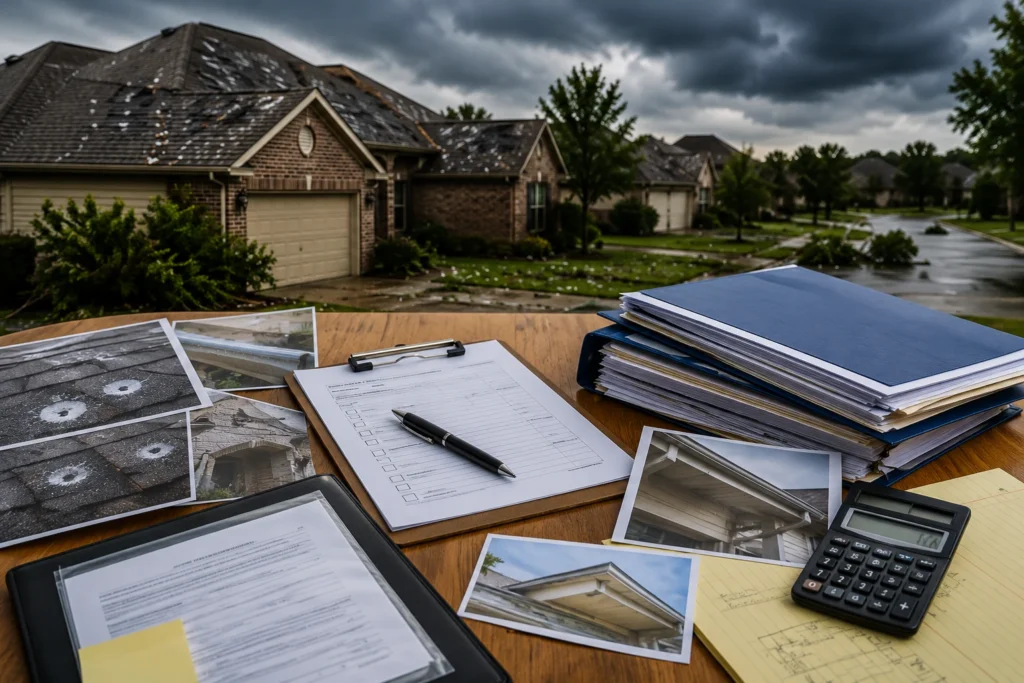
A strong appeal package presents information clearly and logically. Think of it as telling the story of your claim through evidence.
Include:
Core Documents
- Denial letter
- Insurance estimate
- Claim correspondence
- Inspection reports
Supporting Materials
- Weather records
- Photographs
- Videos
- Contractor estimates
Timeline
Create a simple timeline showing:
- Storm date
- Discovery date
- Claim filing date
- Inspection dates
- Denial date
- Reinspection dates
Reviewers appreciate organization. Clear evidence often receives more serious consideration than scattered documentation.
What Happens If the Denial Is Reversed?
Successful challenges can produce several outcomes.
The insurer may:
- Reopen the claim
- Approve previously denied damage
- Issue supplemental payments
- Revise repair scopes
- Authorize replacement work
Sometimes a claim moves from complete denial to partial approval. Other times substantial additional payments are issued. Every claim is different. The important point is that denial does not necessarily represent the final outcome.
Final Thoughts
Receiving a denial letter can feel discouraging. However, homeowners dealing with What to Do If Your Hail Claim Was Denied in Friendswood, TX should remember that many successful claims began with an initial rejection. Insurance companies make decisions based on the information available to them. If important evidence was missed, overlooked, or unavailable during the original investigation, additional documentation may change the outcome.
Take the time to understand the denial. Gather evidence. Obtain independent inspections. Review weather data. Explore reinspection opportunities. Consider professional assistance when appropriate. Most importantly, do not assume that the first answer is always the final answer. For many Friendswood homeowners, persistence, preparation, and strong documentation have turned denied hail claims into successful recoveries. The homeowners who achieve the best outcomes are often those who remain organized, proactive, and committed to presenting the strongest possible case.
FAQs
Yes. A denial is not always final, and homeowners can often submit additional evidence, request a reinspection, or pursue other dispute resolution options.
The timeline depends on your policy and circumstances, so review your denial letter and policy documents carefully for applicable deadlines.
In many cases, yes. An independent inspection may identify storm damage that was overlooked during the original evaluation.
You may need documentation from qualified roofing professionals showing that the damage is consistent with hail impacts rather than normal aging.
Yes. Storm reports, radar data, and hail records can help establish that a significant hail event occurred in your area.
A reinspection is a follow-up evaluation of your property after new evidence or documentation is presented to the insurance company.
Only perform emergency repairs when necessary to prevent further damage. Permanent repairs may remove evidence that could be important to your claim.
A public adjuster may be helpful when the claim involves significant damage, disputed findings, or repeated denials.
Appraisal is a policy-based dispute resolution method that can help resolve disagreements regarding the amount of loss or scope of damage.
Yes. Some denied claims are reversed after additional inspections, stronger documentation, negotiations, or formal dispute resolution processes.