
A house fire changes everything in minutes. One moment, life feels normal. The next, you’re dealing with smoke, damage, and uncertainty. This is exactly where a fire insurance adjuster enters the picture and understanding their role can make or break your claim.
I’ve seen it happen too often. Homeowners assume the insurance company will handle everything fairly. Sometimes that works. Often, it doesn’t. The truth is simple: if you don’t understand how a fire insurance adjuster works, you could leave serious money on the table.
Let’s break it down. Clearly. Practically. No fluff.
What Is a Fire Insurance Adjuster?
Definition and Core Responsibilities
A fire insurance adjuster is the professional responsible for evaluating fire damage and determining how much your insurance company should pay.
Their job includes:
- Inspecting the property
- Documenting damage
- Estimating repair or replacement costs
- Reviewing your insurance policy
- Recommending a settlement amount
Sounds straightforward. But the details? That’s where things get complicated.
Types of Fire Insurance Adjusters
Not all adjusters work for you. In fact, most don’t.
Here’s the breakdown:
- Company Adjuster
Works directly for your insurance company. Their priority is protecting the insurer’s bottom line. - Independent Adjuster
Contracted by insurance companies. Still represents the insurer, not you. - Public Adjuster
Hired by you. Works exclusively in your best interest.
That distinction matters more than most people realize.
How Fire Insurance Adjusters Assess Damage
Initial Inspection Process
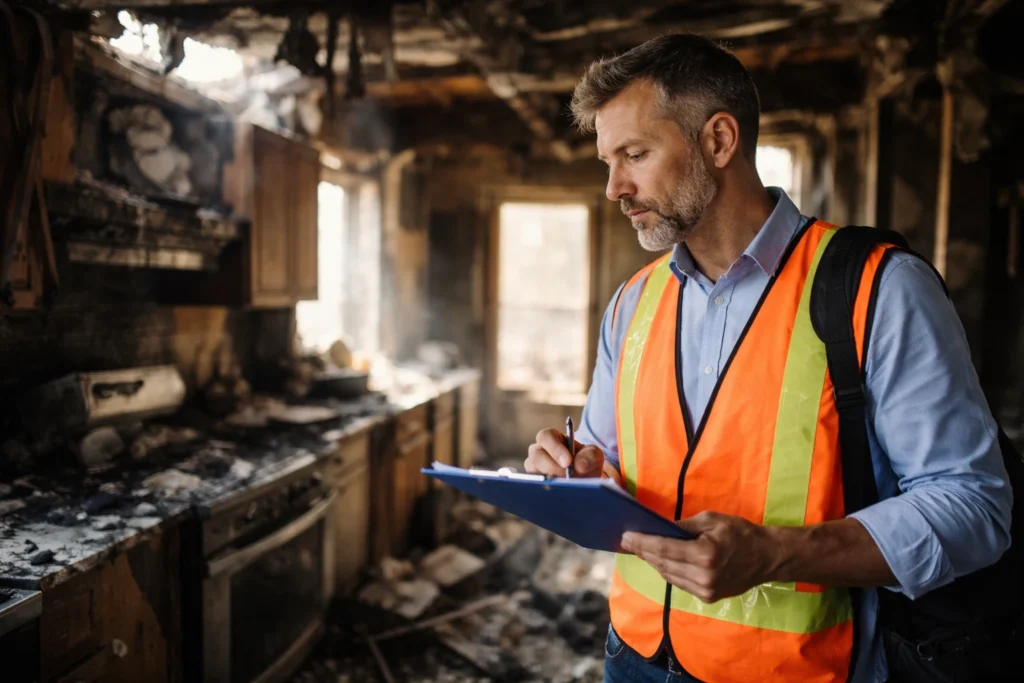
After you file a claim, a fire insurance adjuster will visit your property. This is a critical moment.
They will:
- Take photos and videos
- Walk through the entire structure
- Identify visible and potential hidden damage
- Begin creating a damage report
Here’s the catch what they miss early can impact your entire claim.
Estimating Fire and Smoke Damage
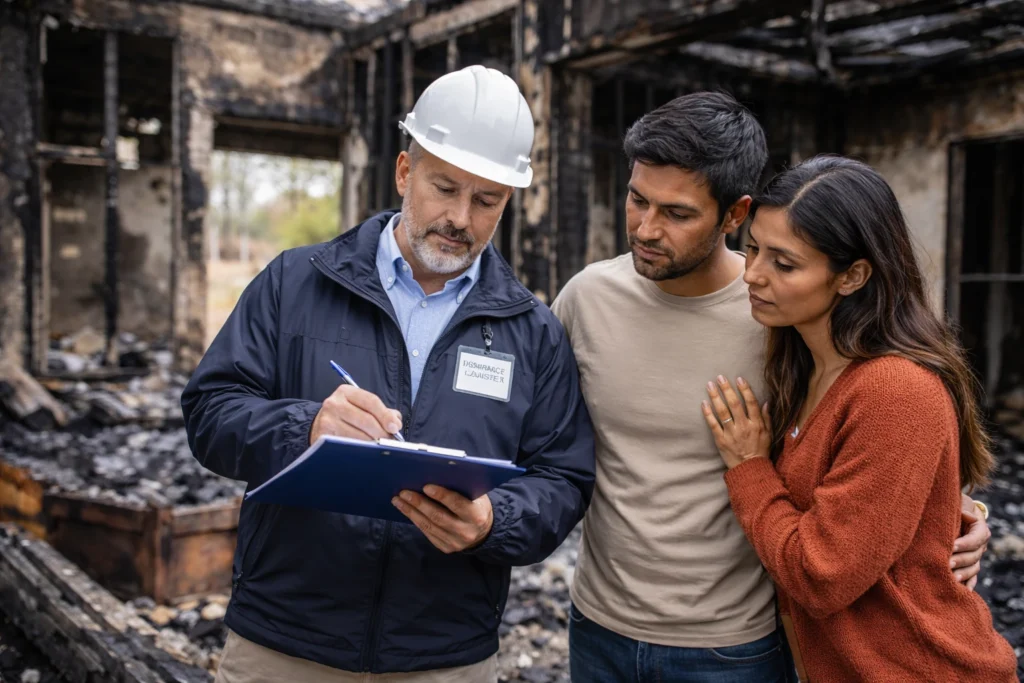
Fire damage isn’t just what you can see. It’s layered.
Adjusters look at:
- Structural damage (walls, roofing, foundation)
- Smoke damage that penetrates surfaces
- Soot contamination
- Water damage from firefighting efforts
In many cases, materials can undergo a process similar to Pyrolysis, where heat alters their structure even without direct flames, making damage harder to detect but still critical to address.
Reviewing Your Insurance Policy
This is where numbers meet fine print.
Your fire insurance adjuster will evaluate:
- Coverage limits
- Replacement cost vs actual cash value
- Deductibles
- Exclusions
If you don’t understand your policy, you’re already at a disadvantage.
The Fire Insurance Claims Process Step-by-Step
Filing the Claim
The process starts with a call. Or an online submission.
Be ready to provide:
- Date and cause of fire
- Description of damage
- Immediate needs
Speed matters. But accuracy matters more.
Investigation and Evaluation
The fire insurance adjuster investigates your claim in detail.
Expect:
- Follow-up inspections
- Requests for documentation
- Questions about the incident
This stage sets the tone for your payout.
Settlement Offer
Eventually, you’ll receive an offer.
But here’s what you need to understand:
- It’s often not final
- It may not include all damages
- It may factor in depreciation
Don’t rush this step. Seriously this is where many homeowners lose thousands.
Claim Resolution
Once agreed, payment is issued.
Depending on your policy:
- You may receive partial upfront funds
- Additional payments may come after repairs
- Timelines can vary
Stay organized. Keep records. Always.
Common Challenges Homeowners Face After a Fire
Let’s be real. This process isn’t easy.
Here are the most common issues:
- Undervalued damage
- Delayed claims
- Coverage disputes
- Emotional decision-making
This is why understanding the role of a fire insurance adjuster is so important.
Why Hiring a Public Fire Insurance Adjuster Matters
Advocating for Your Best Interests
A public fire insurance adjuster works for you. Not the insurance company.
That changes everything.
They:
- Represent your claim
- Handle negotiations
- Push for a fair settlement
Maximizing Your Settlement
Public adjusters:
- Identify hidden damage
- Ensure nothing is missed
- Use detailed estimates to support your claim
In many cases, they uncover losses homeowners didn’t even know to include.
Saving Time and Reducing Stress
A public adjuster:
- Manages paperwork
- Communicates with insurers
- Keeps your claim moving
You focus on rebuilding your life. They handle the rest.
Fire Insurance Adjuster vs Insurance Company Adjuster
| Feature | Public Adjuster | Insurance Company Adjuster |
| Who they represent | You (policyholder) | Insurance company |
| Goal | Maximize your payout | Minimize claim cost |
| Payment | Percentage of settlement | Salary/contract |
| Negotiation | Strong advocate for you | Represents insurer |
| Impact | Often higher settlements | Often lower initial offers |
When Should You Call a Fire Insurance Adjuster?
You should consider contacting a fire insurance adjuster:
- Immediately after a fire
- If your claim feels overwhelming
- If your settlement seems too low
- If your claim is denied
- If the damage is extensive
Tips for Working With a Fire Insurance Adjuster
- Document everything
- Keep receipts and records
- Don’t rush to accept first offer
- Stay organized
- Ask questions
Local Insight: Fire Claims in Friendswood, Texas
Friendswood homeowners face unique risks such as electrical faults, weather-related incidents, and structural vulnerabilities.
A knowledgeable fire insurance adjuster familiar with local conditions can:
- Better estimate regional repair costs
- Navigate insurer expectations
- Strengthen your claim with local insight
Mistakes to Avoid During a Fire Insurance Claim

- Waiting too long to file
- Throwing away damaged items too soon
- Accepting low settlement offers
- Not reading policy details
- Trying to handle everything alone
How to Choose the Right Fire Insurance Adjuster
Key Qualities to Look For
- Proper licensing
- Fire claim experience
- Strong negotiation skills
- Clear communication
Questions to Ask Before Hiring
- How do you charge fees?
- What’s your experience with fire claims?
- Can you share past results?
- What’s the expected timeline?
Conclusion
A fire doesn’t just damage your home. It disrupts everything.
And in that moment, the role of a fire insurance adjuster becomes critical.
Understand the process. Stay informed. And don’t go through it blindly.
The difference between a stressful claim and a successful one often comes down to who’s representing you. If you’re in Friendswood, getting the right help early isn’t just smart it’s essential.
FAQs
A fire insurance adjuster evaluates property damage, reviews your policy, and determines how much your insurance company should pay for your claim.
Not always company and independent adjusters represent the insurer, while a public adjuster works for you.
You should consider hiring one immediately after a fire, especially if the damage is significant or the claim process feels overwhelming.
Damage is assessed based on repair or replacement costs, policy coverage, and factors like depreciation or smoke contamination.
Yes, you can negotiate, and many homeowners do especially if the initial offer doesn’t fully cover the damage.
Replacement cost covers rebuilding or replacing items at current prices, while actual cash value factors in depreciation.
It can take anywhere from a few weeks to several months, depending on the complexity of the damage and claim.
Avoid throwing away damaged items too soon or accepting the first settlement without reviewing it carefully.
In many cases, yes they often identify overlooked damages and negotiate higher settlements on behalf of homeowners.
Company adjusters are paid by the insurer, while public adjusters typically charge a percentage of the final settlement.